29 stores · One workflow · Every vendor
How Three Bears Alaska turned hand-built purchase orders into a scan-and-go workflow
A 29-store grocery chain was juggling multiple vendor systems, hand-built POs, and no real visibility into what they actually had on the shelf. FortisureIT built SmartPO, a predictive purchase ordering platform that runs on both desktop and Zebra handheld scanners and turns manual ordering into intelligent PO creation.
Client
Three Bears Alaska
Industry
Retail / Grocery
Services
Timeline
Ongoing engagement
Tech Stack
Next.js · MS SQL · Azure · Zebra TC57
Key Results
Numbers that moved
25+
Stores live on SmartPO
~25%
Less time building purchase orders
1
Workflow for many vendors
Who We Worked With
Three Bears Alaska
Three Bears Alaska is an Alaska-based grocery and general merchandise retailer. Its 29+ stores keep communities across the state supplied with everything from fresh produce to seasonal goods.
Serving shoppers at that scale means keeping shelves full against unpredictable demand, coordinating orders across its own warehouses and outside vendors, and managing the data behind every purchase order.
FortisureIT has partnered with Three Bears Alaska for more than three years on the software behind those operations, a relationship that gives us a close view of how the business runs and where the right tools deliver the most value.
The Challenge
Ordering by gut feel
across a dozen tools
Over-ordering was driving shrink as fresh product spoiled. Under-ordering was costing sales when shelves went empty. Both were leaks the business could close. The right information just had to show up at the moment a PO was being built.
Three Bears Alaska runs 29+ stores, ~2,000 employees, and hundreds of millions in annual revenue. To keep shelves stocked, store-level employees were placing purchase orders against multiple vendors (Three Bears' own warehouses, Costco, and others) using a patchwork of tools and, in some cases, editing orders by hand.
The bigger problem though, was accurate visibility. Order quantities were decided largely by gut feel, with no reliable view of how much product was actually on hand at the store, what was already in flight on a previous PO, or what sales history said the store would actually need that week.
Our initial reporting work surfaced the gap, but the dashboards we built weren't getting looked at. When that became clear, Three Bears asked us to build a v2 of the reports: same idea, restructured.
We pushed back. The problem wasn't the report's layout; it was that nobody opens a report when they're already mid-task. Rebuilding the dashboard would have been the easy win: billable, low risk, and exactly what the client asked for. It also wouldn't have moved the needle. We argued instead for the harder path: stop building reports and put the data inside the workflow, at the moment a PO was actually being built. That recommendation became the foundation for SmartPO.
What It Was Costing
Facing Similar Challenges? →Operations
Guesswork on every order
Store managers and supervisors placed orders with no predictive data and little to no on-hand visibility, guessing quantities or walking to back-of-store storage to check. Every vendor meant a separate system, format, and workflow to train on and relearn.
Finance
Money burnt at both ends
Over-ordering perishables drove shrink as fresh product spoiled, while under-ordering popular items left missed sales. With no sales history or reliable on-hand data guiding quantities, there was no way to strike the balance, and the losses landed straight on the bottom line.
IT
Locked out of vendor tools
IT managed credentials across numerous vendor portals and fielded support for systems it couldn't change. Rigid third-party platforms left no way to adapt to how stores actually operated.
What We Built
SmartPO,
a single portal for every vendor
SmartPO lives inside the Smart Tools Hub and runs on desktop and the Zebra TC57 handhelds employees already carry. A PO is opened against any vendor (Three Bears warehouses, Costco, others to come), and items get added by scanning a barcode or searching by name, UPC, or Costco item number.
As items go on the order, SmartPO suggests how many cases to order based on past seasonal sales and metrics maintained by office admins, with the goal of maximizing sales while minimizing shrink.
Predictive Ordering
Suggested order quantities pull from sales history and admin-tuned metrics, so PICs (the employees placing orders) get a strong default instead of guessing. Rather than replacing judgement, it gives them a jumping-off point that any new hire can fall back on.
One workflow, every vendor
Three Bears warehouses and Costco have very different PO formats, item structures, and on-hand tracking. SmartPO normalizes all of it behind a single, consistent UI so PICs don't have to relearn a different tool every time the vendor changes.
Custom routing
Department heads can be set as recipients for the POs they care about, so they don't have to walk to the back office to review and send orders. When that gap was identified mid-rollout, it went from new idea → contract → development → testing → feature live in about two weeks.
What It Delivers
Explore App Development →Operations
One workflow, smarter orders
Warehouse and Costco ordering run through a single interface with normalized data and predictive quantity suggestions built into the flow. Real-time on-hand and on-order visibility lets staff decide without a trip to storage or accounting.
Finance
Waste avoided, sales fulfilled
Predictive quantity suggestions pull from sales history to curb both over and under ordering, protecting margin on perishables while keeping popular items on the shelf for customers. The shrink and missed-sales leaks that used to hit the P&L get closed right as the order is being built.
IT
A platform they control
IT staff tune algorithm inputs like days-on-hand goals straight from the database, shifting recommendations across every store without code changes. New features and interface changes ship in weeks rather than waiting on product vendors to tune their tools to Three Bears Alaska's flow.
Product Snapshot
SmartPO,
from the floor and the desk
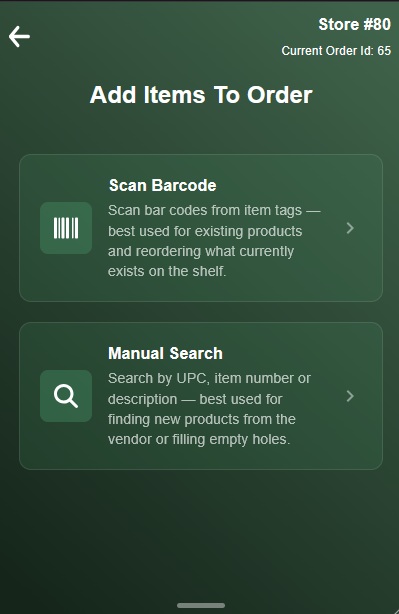
Building a PO · Scan, search, set quantities
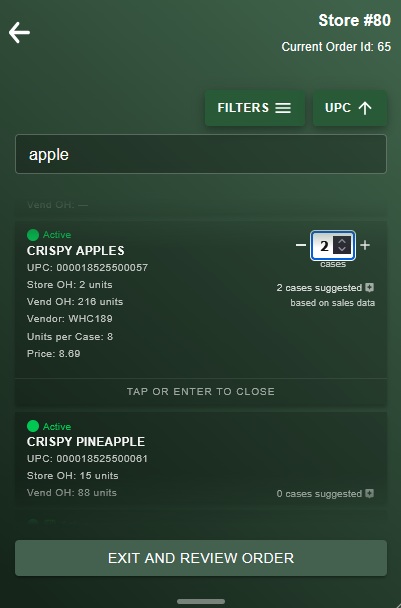
Typeahead search · Any item, any vendor
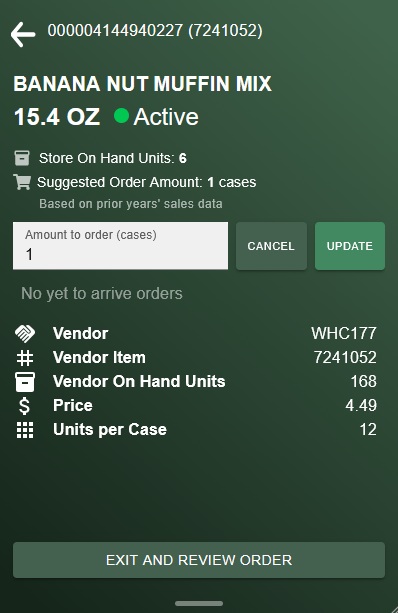
Scanned item · On-hand context and suggested order
Before & After
From a tangle of tools
to one workflow on the floor
The Bigger Picture
Visibility in meeting rooms
but not on the sales floor?
Reports and dashboards have their place. Usually in meetings where someone's reviewing the week. The trouble is that the people actually placing orders, taking calls, and restocking shelves don't have the time to stop and dredge one up. SmartPO worked because the data showed up where a decision was being made: in the field where a quantity was being typed. When that's the gap your team is feeling, the right answer isn't always another dashboard. It's a custom application that brings the data to where the work is.
Related Case Studies